Helping young adults read more in this era driven by short form content
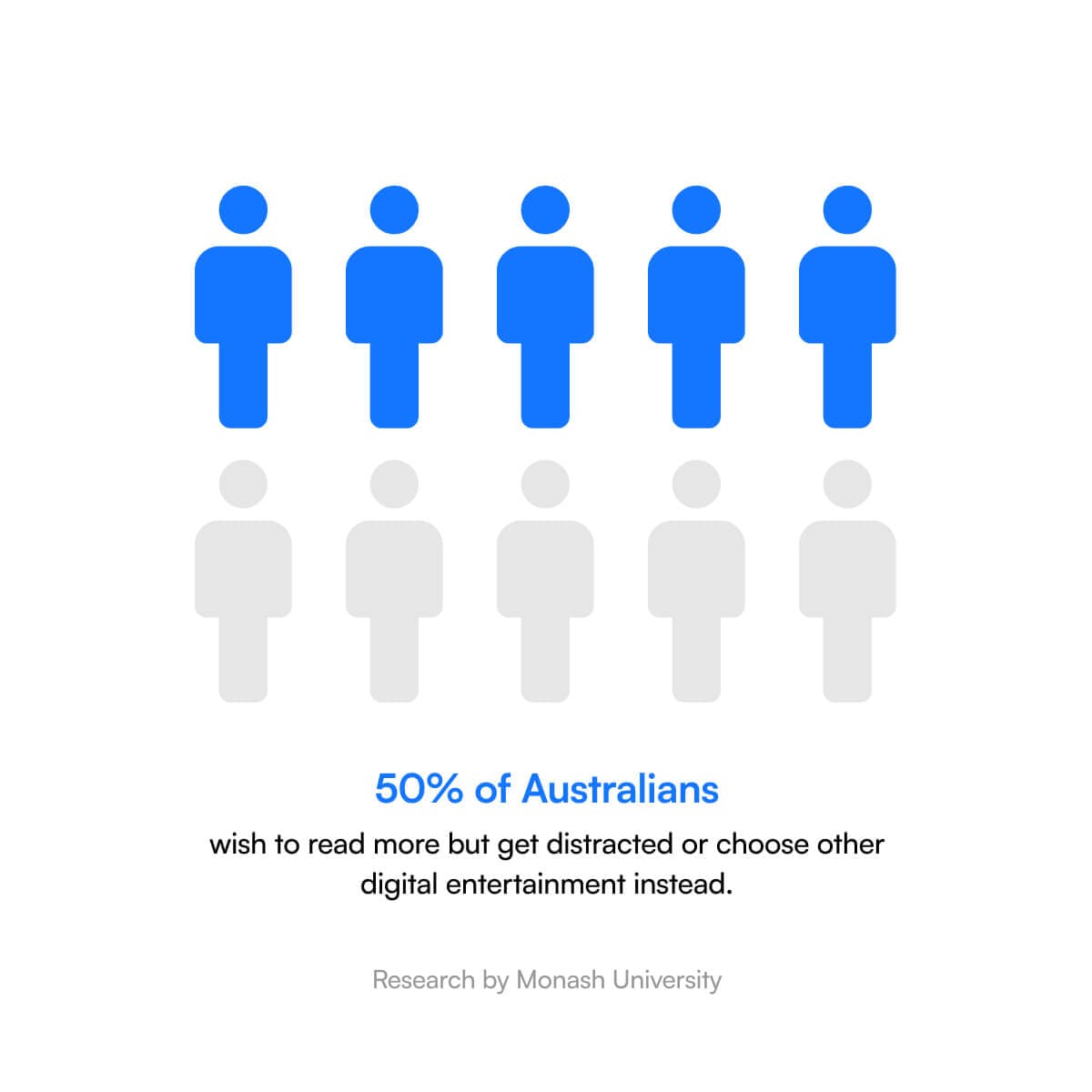
Short-form video addiction has made it harder for young adults to spend time reading

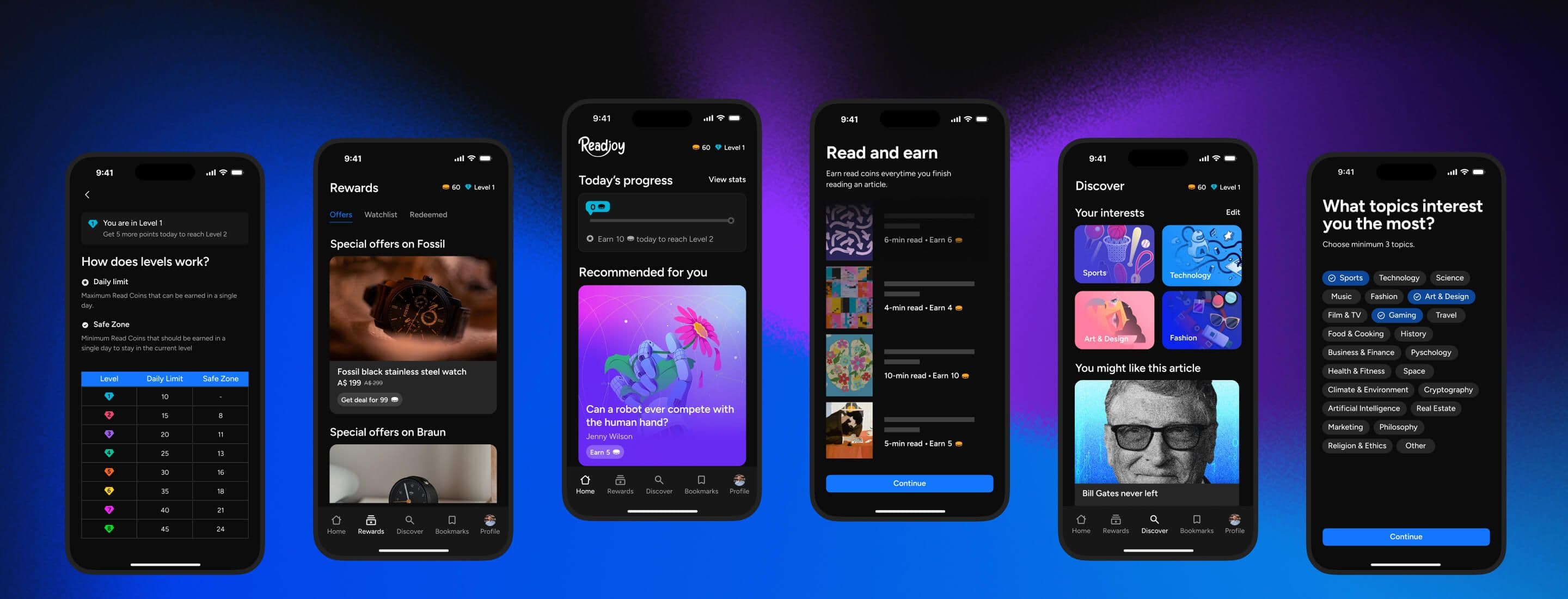
Introducing Readjoy - An app that turns unproductive screen time into rewarding reading time through gamification
Personalised onboarding for tailored content
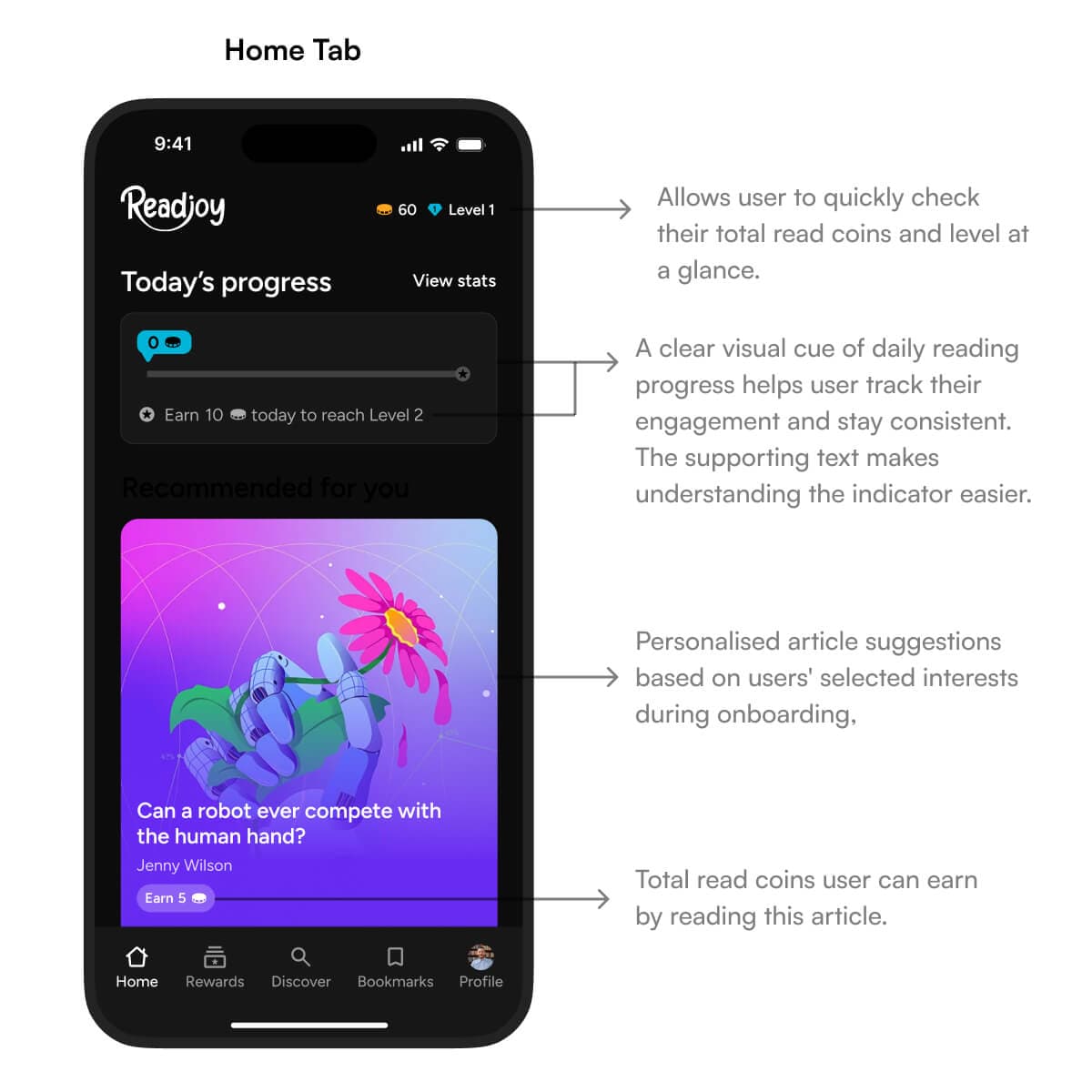
During onboarding, users choose topics they’re interested in, which shapes the articles shown on their home page. As they read more, the algorithm updates recommendations based on their preferences. For example, showing more football content to regular football readers.
Introducing a better reading experience
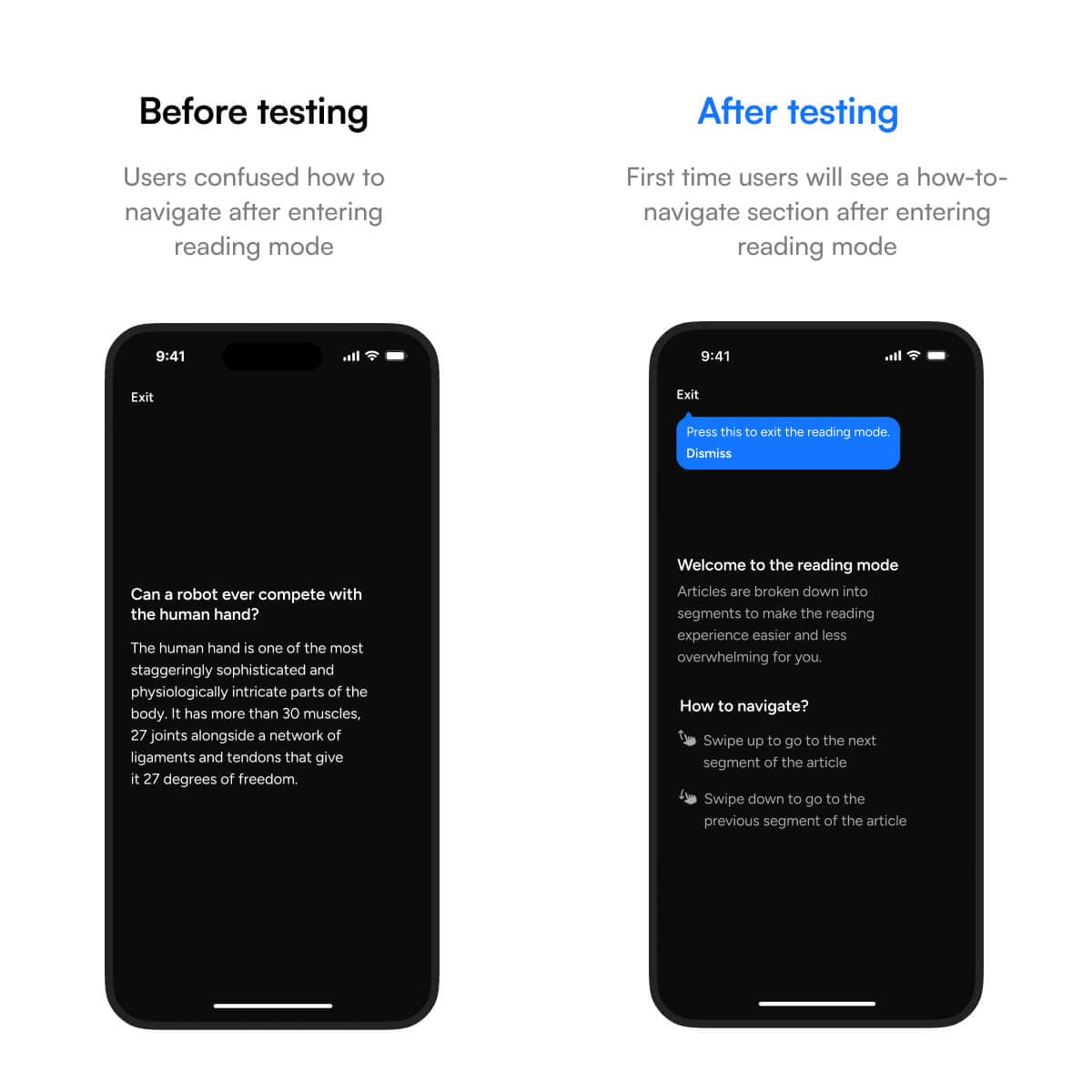
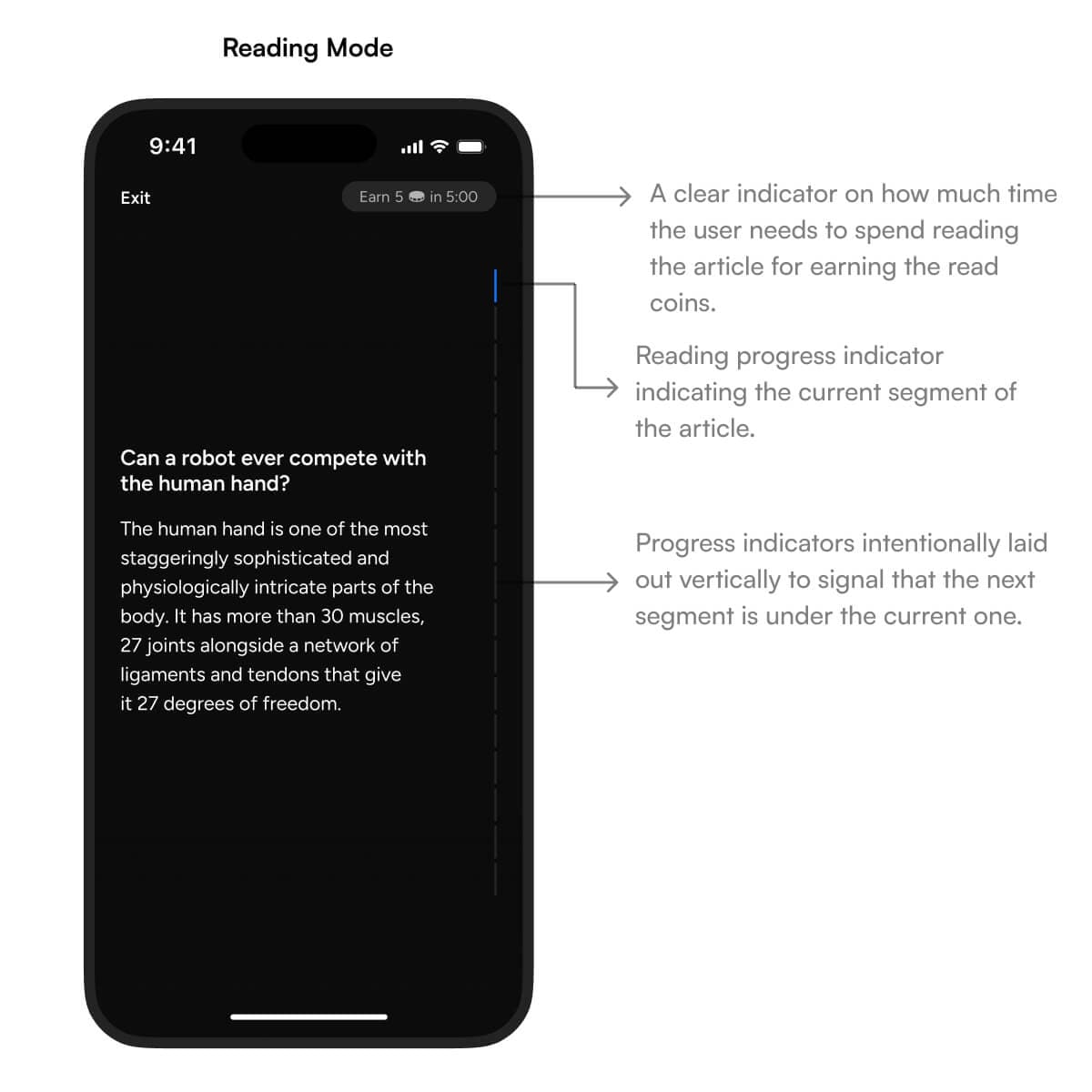
When users open an article, they enter a swipe-based reading experience where the article is split into segments, and users swipe up or down to read. First-time users get a quick introduction to how it works.
Earning read coins by reading an article
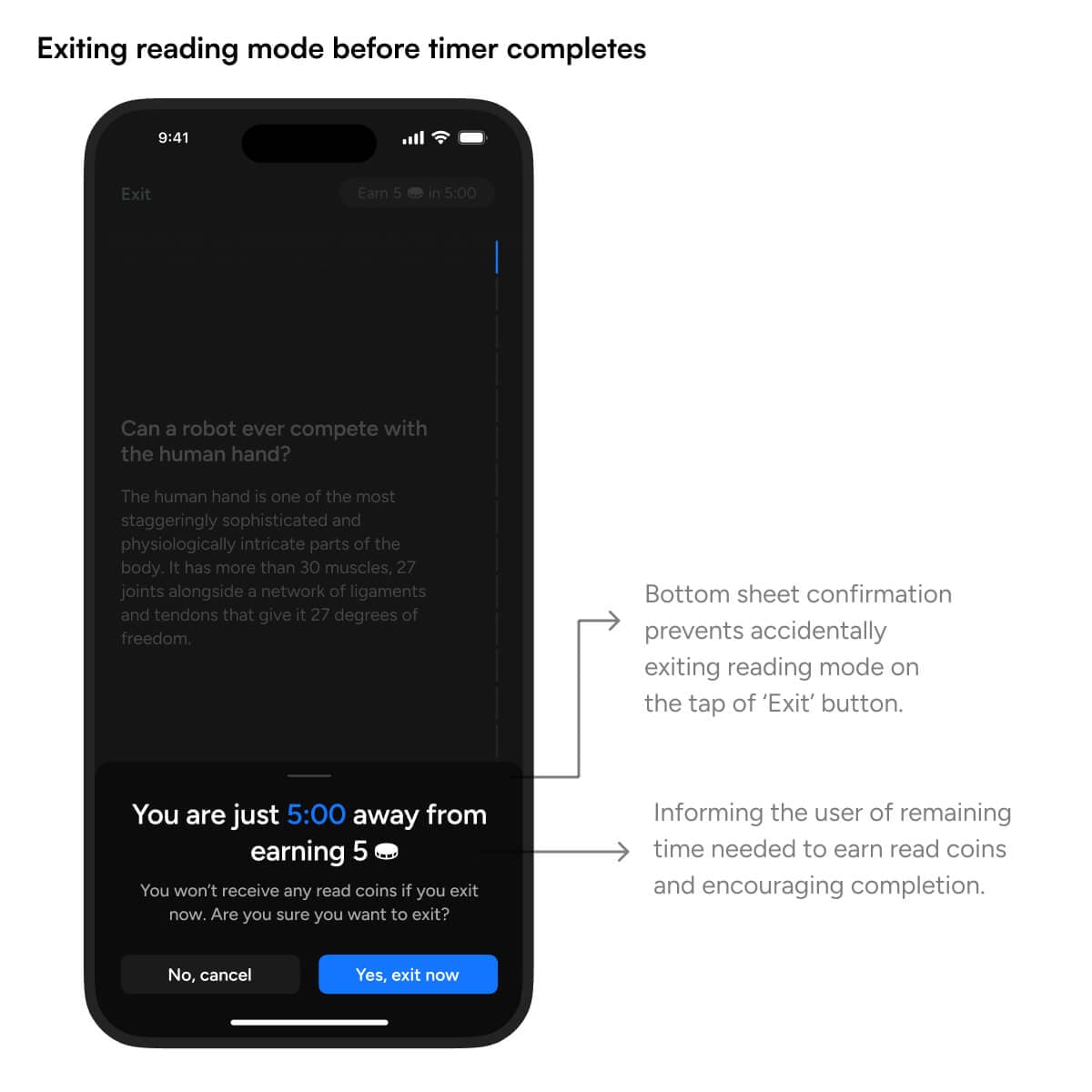
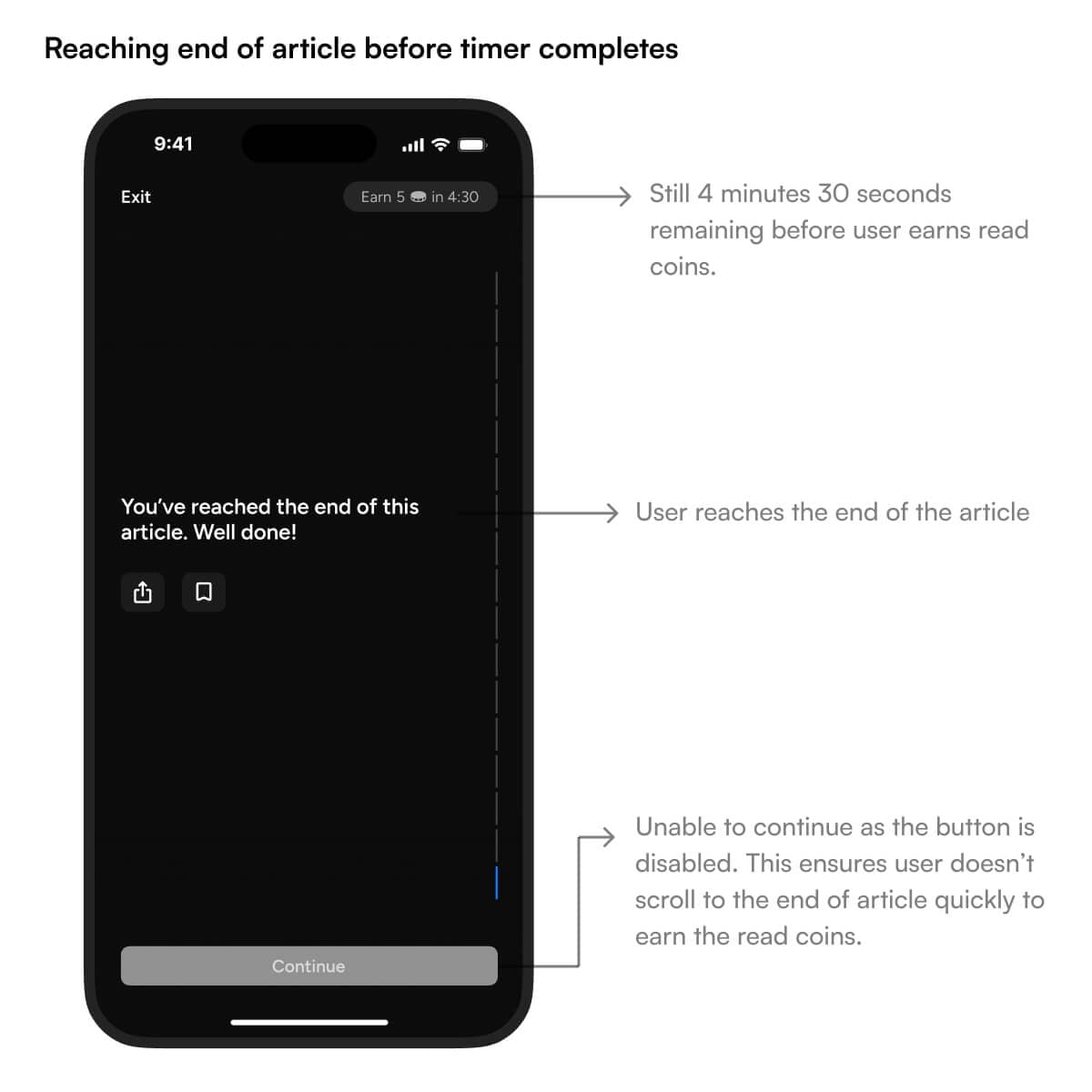
The article’s read time determines how many read coins a user can earn. For example, a 3-minute article requires at least 3 minutes in reading mode to earn 3 read coins.
Buying products with read coins
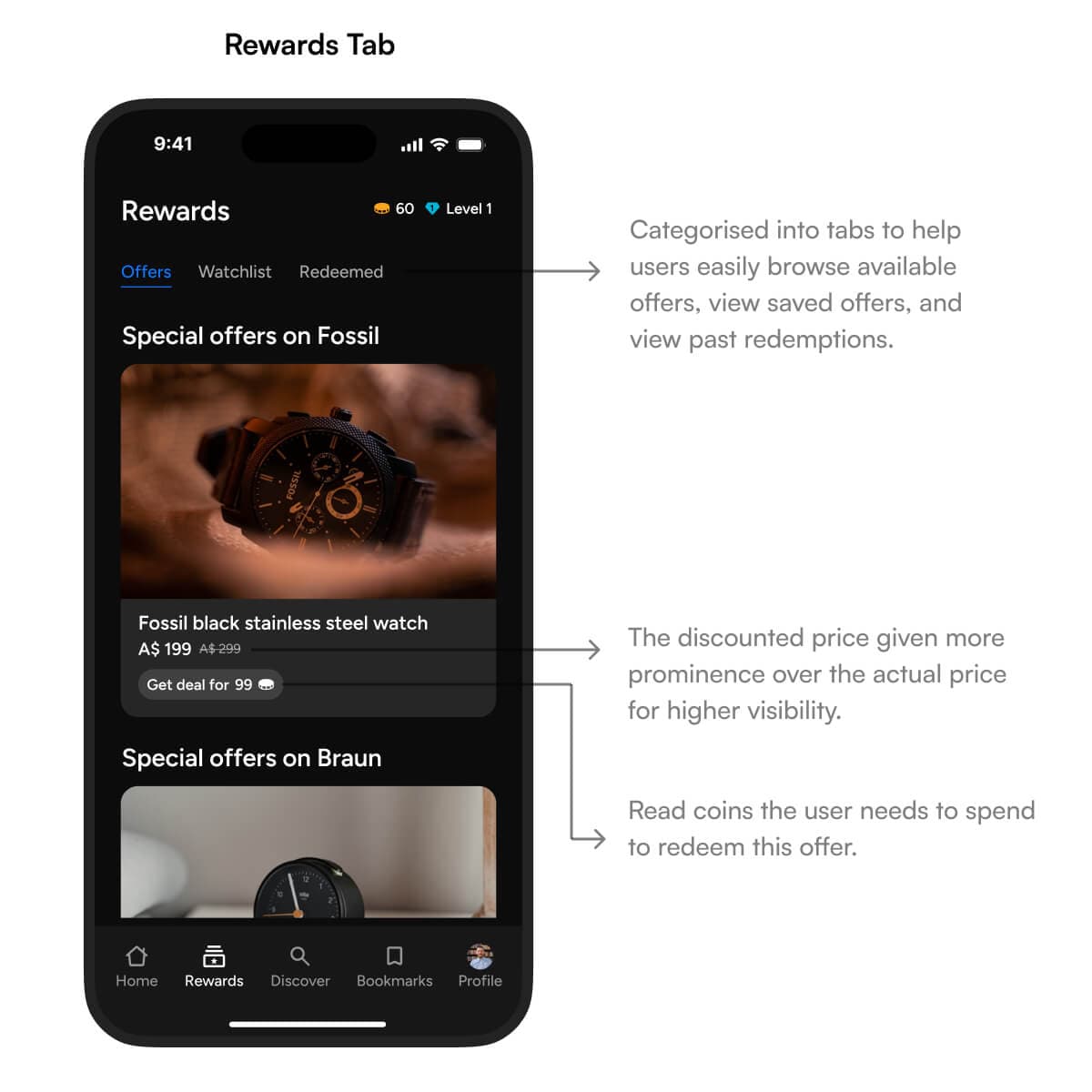
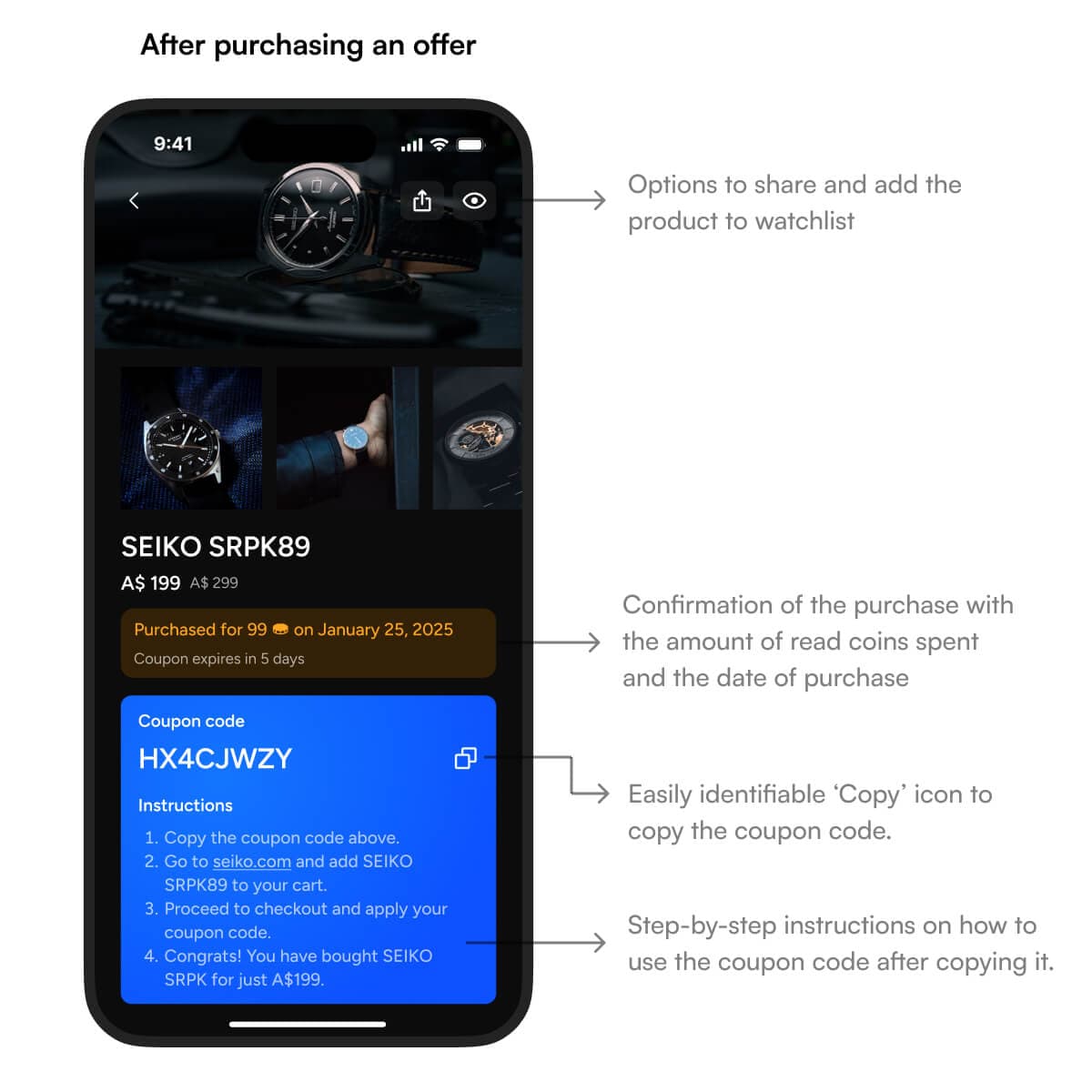
I found that the rewards must feel meaningful for users to keep engaging with the app. In Readjoy, users can use their read coins in the shop to redeem discounts on products like electronics, accessories, and gift cards.
Rethinking the reading experience
I designed a swipe-based reading experience where articles are broken down into digestible segments. Users move through the article by swiping up and down, similar to how they navigate short-form videos.
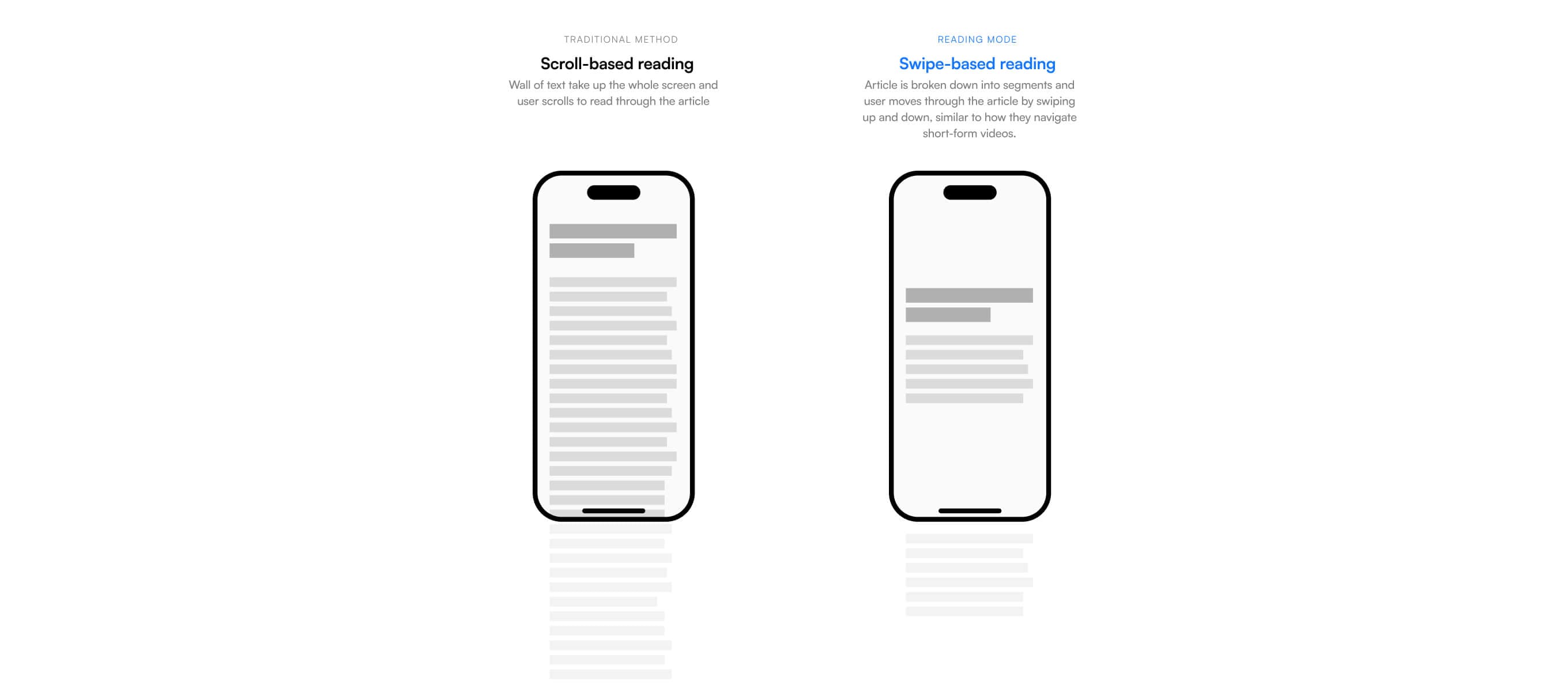
Testing revealed that users found the scroll-based format familiar but enjoyed reading in the swipe-based format
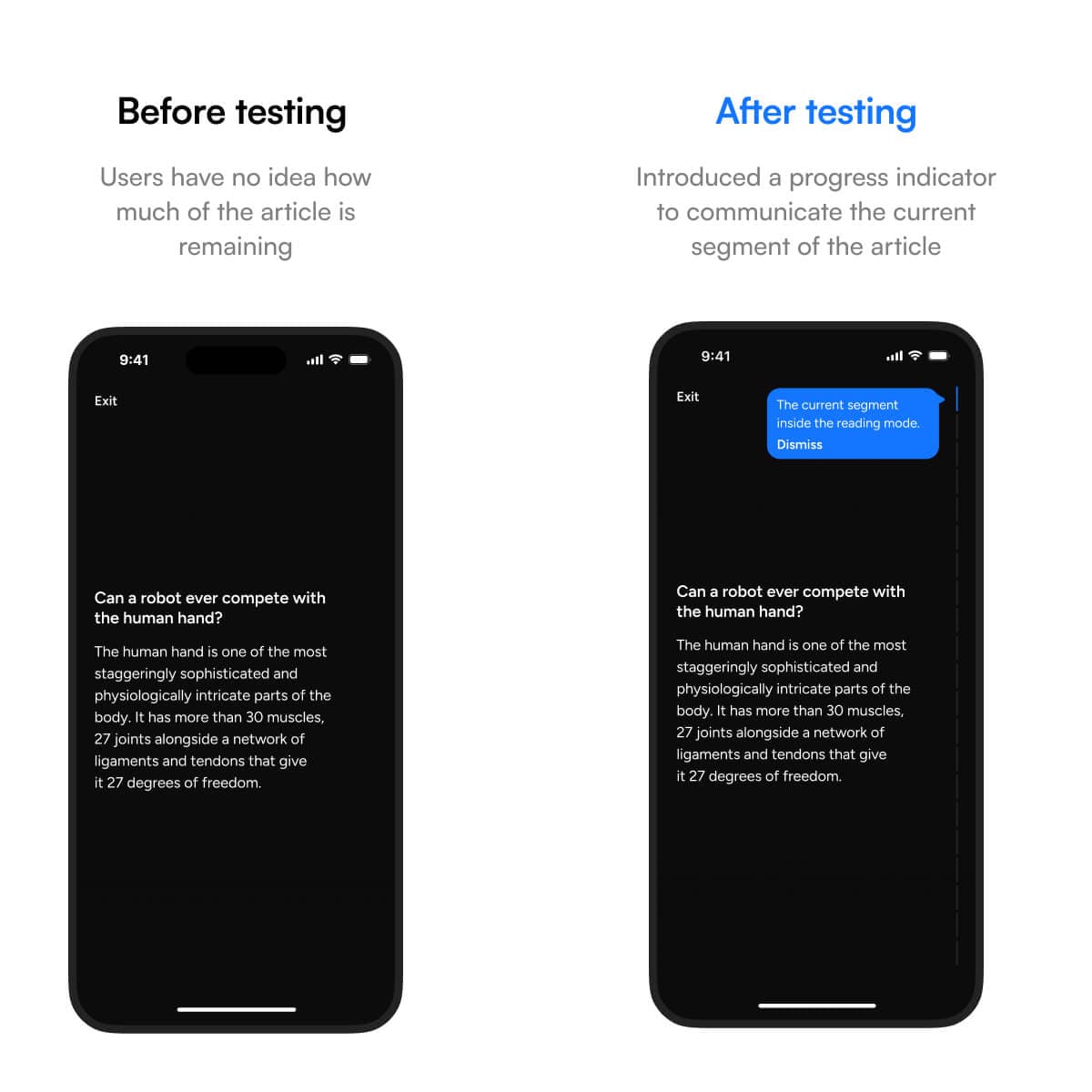
Using gamification to make reading engaging
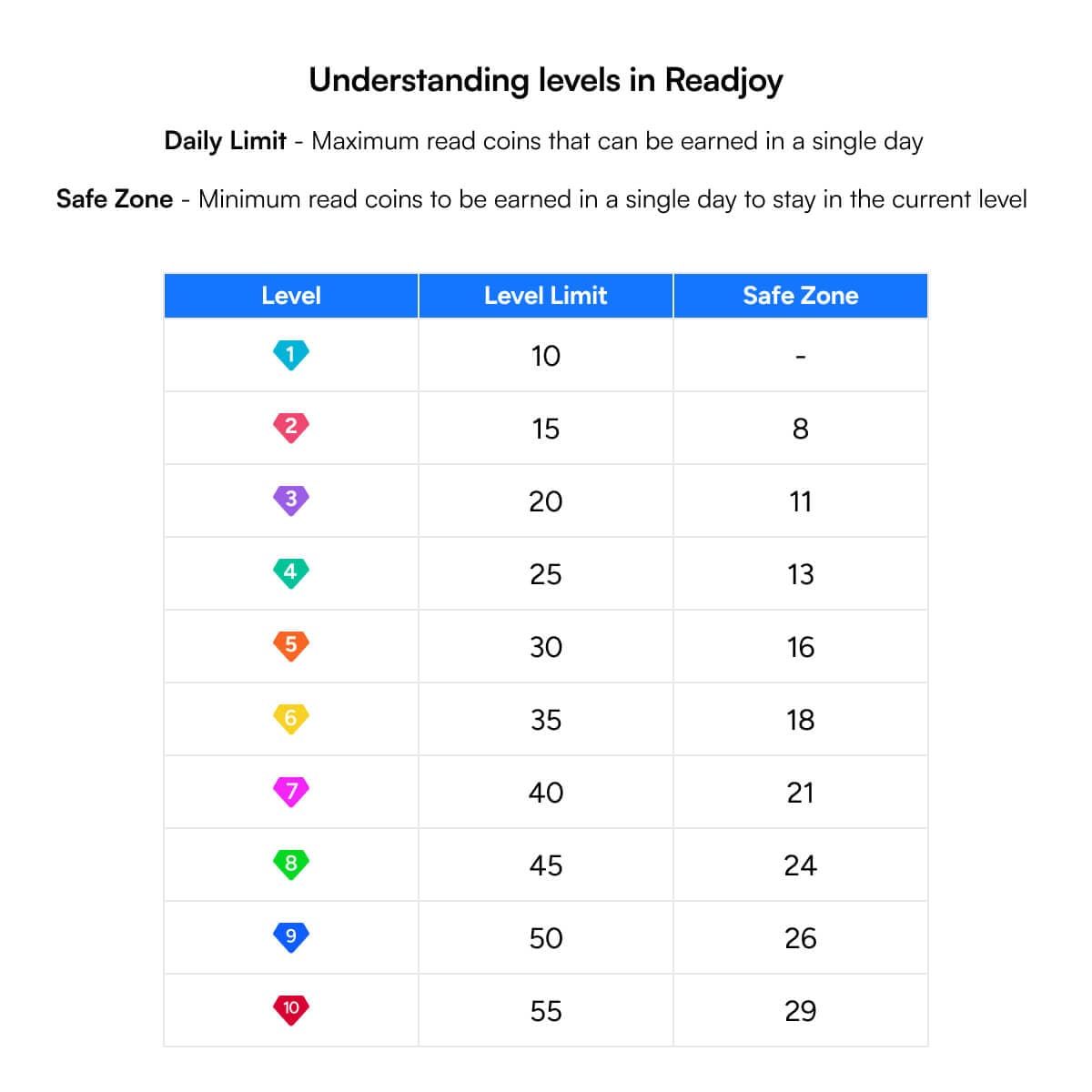
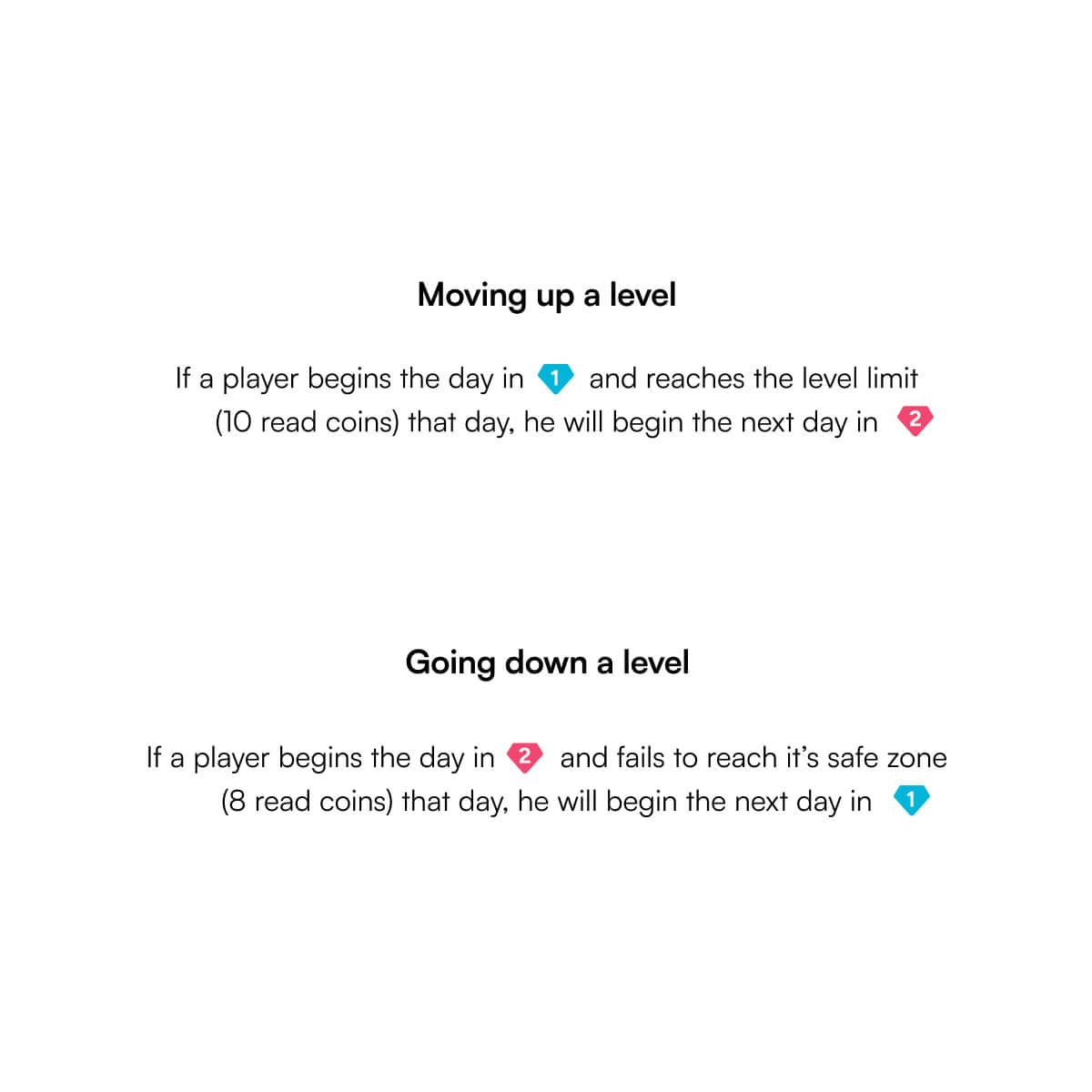
Most habit-building apps use compulsion loop to keep users engaged. The user performs an action, receives a reward for that action, another possibility opens, and the cycle repeats. This pattern inspired me to add gamification to Readjoy, since I had the same goal of keeping users engaged while reading.
Key screens and key design decisions
Things I learned from this project
It is important to have strong intuition when moving fast
Since I was working under time constraints, I could not back every decision with extensive research. I had to make informed assumptions based on insights from the surveys and secondary research. Receiving positive feedback during testing reassured me in my intuition and helped me move forward confidently.
Always critically analyse your ideas with someone
You never know how good or bad your ideas are if you don't discuss it with anyone. Critically analysing my gamification ideas with my brother helped me identify gaps I hadn’t considered and refine it to a point where the whole experience felt more entertaining.